Jordaan
The most charming district, narrow canals, independent galleries, brown cafes, and the Saturday Noordermarkt. Quiet, residential, and walkable to everything. The local's choice.

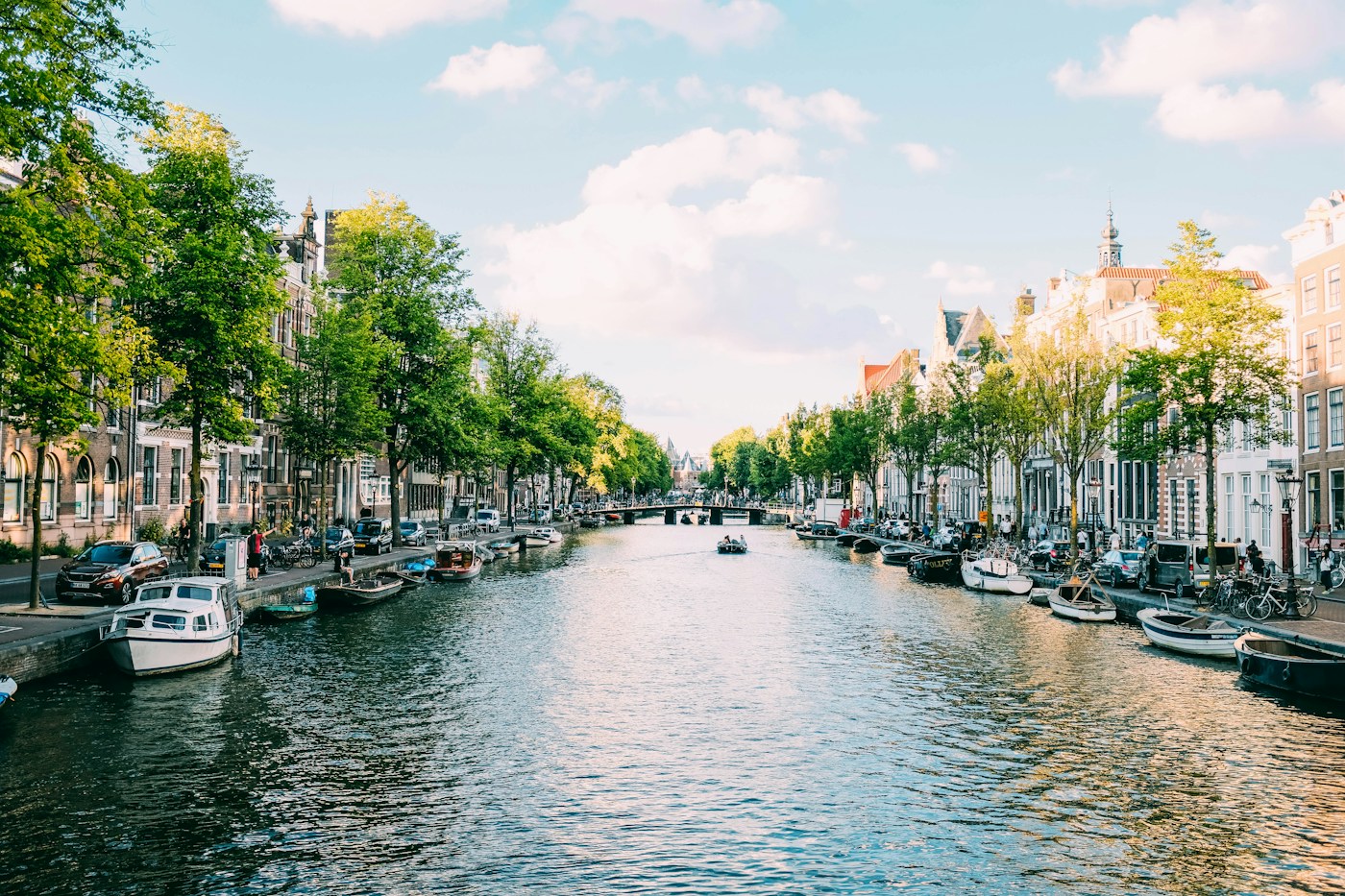
Amsterdam is built in rings, and the closer to the centre you sleep, the more the city does the work for you. The canal belt is a UNESCO-listed grid of seventeenth-century merchant houses, and staying inside it puts the museums, the cafes, and the bridges a short flat walk or a shorter bike ride away.
This is a low, slow, human-scaled city. The pleasure is not landmarks ticked off but the hour spent watching boats from a canal-side bench. Choose a quiet quarter, rent a bike, and let the rhythm slow to the speed of the water.
The most charming district, narrow canals, independent galleries, brown cafes, and the Saturday Noordermarkt. Quiet, residential, and walkable to everything. The local's choice.
The postcard rings, gabled houses, the Nine Streets shopping, and the Anne Frank House. Central and beautiful, busier near the main canals. The convenient heart.
Younger and livelier, the Albert Cuyp market, global restaurants, and the Heineken site. A short ride from the museums, with better-value dinners.
Grand and green, the Rijksmuseum, the Van Gogh Museum, and Vondelpark. Calm, upscale, and slightly removed from the late-night noise. Good for families and culture-first trips.
April for the tulips and King's Day on 27 April, then May to September for long days and canal-side terraces, are the prime windows; tulip season books out months ahead and runs expensive. June and early September pair good weather with slightly easier rates.
Winter, November to February, is dark and atmospheric, with quiet museums and the lowest prices of the year. For value with long daylight, aim for May or September.
The train from Schiphol to Amsterdam Centraal is usually the simplest arrival for canal-belt hotels, though a taxi can be worthwhile with several bags, children, or a property far from a tram route. Historic-center streets are narrow, stairs are steep, and cars rarely improve short journeys. Walk, use trams, and consider cycling only if you are confident reading busy bike traffic.
Group the canal belt, Jordaan, and Nine Streets together; pair Museumplein with De Pijp or Vondelpark. Check the final walk from the tram stop before choosing a hotel, especially when luggage, reduced mobility, or bridge crossings make a short distance more demanding.
In Amsterdam, the room's physical details matter. Ask about stair steepness, lift access, canal or courtyard orientation, ceiling height, and street noise before booking a converted townhouse. Canal views are romantic, but a quiet rear room may produce the better stay.
Museum Quarter offers larger, calmer hotels, while the Jordaan and central canal rings reward travelers who accept compact layouts for atmosphere. Reserve the Anne Frank House, Van Gogh Museum, and Rijksmuseum using official ticket channels, then build open time around them. If visiting during tulip season or a major cultural weekend, secure lodging early and choose flexible terms where possible.
Give one collection your full attention, then let the water and the neighbourhood set the pace.
Begin at a major museum with the earliest timed entry, then walk through Museumplein or Vondelpark before lunch. One excellent collection is enough for a morning; adding several usually replaces attention with fatigue and leaves no room for the city.
Give the canal belt an unhurried afternoon. Browse the Nine Streets, cross into the Jordaan, and stop beside the water when the light changes. A small boat tour adds context, but walking afterward reveals the scale of individual blocks.
Choose De Pijp or the Jordaan for dinner, then return by tram and walk the final bridges. Amsterdam after dark is best at human speed, when lit windows, bicycles, and reflections turn an ordinary route home into the evening's final experience.